
ESG (Environmental, Social, Governance) isn’t your average boardroom buzzword. Contrary to recent politically-driven backlash, ESG is not a political tool. ESG is a framework used to evaluate or measure business strategy. It transcends political agendas to focus on the core aspects of business outcomes linked with environmental stewardship, social responsibility, and governance practices.
At its core, ESG performance and disclosure represent a critical lens and business practice that enables companies to navigate risk, identify opportunities, and enhance operational efficiency, while providing investors with transparent information. Transparency aids investors in making informed decisions, incorporating the potential impact on all stakeholders—including employees, customers, communities, suppliers, and financiers—thereby aligning closely with a company’s financial health.
Frameworks vs Scores: A Distinct Difference
It’s important to differentiate between ESG scores and frameworks. A framework is a lens to consider the opportunities and risks associated with business topics relating to ESG. Whether it’s cutting energy costs to meet Building Performance Standards (BPS) or boosting employee diversity for better retention and savings, a framework guides your strategic approach.
An ESG score could help measure a particular entity’s specific ESG attributes, serving as a critical tool for investors to gauge long-term prospects, risk, and non-financial performance. A score by itself may not be particularly useful. It doesn’t tell the full story. Taking a deeper dive – possibly through various ESG reports – reveals the nuanced insights necessary for informed investment decisions.
Materiality: The Linchpin of Decision-Making
Materiality is a key accounting concept defined as information with a substantial likelihood that an investor would consider important in making investment decisions or that’s reasonably certain to have an effect on a company’s value. According to the SEC, this information should be disclosed. This principle is fundamental in guiding what information should be transparently shared.
The Business Imperative for ESG
Adhering to ESG principles is not solely about regulatory compliance or attracting investor interest; but a strategic approach to risk mitigation and sustainable business practice. Whether preparing for the impacts of climate change, fostering diversity in leadership, or addressing global health challenges, properly evaluating ESG considerations and making associated improvements can position companies for long-term resilience and success.
It’s a way to mitigate risk.
Sustainability is the ability for something to be maintained at a certain rate or level. By preparing for long term business risks like climate change, diversity, and global health, your company will be better equipped in the long run.
Consider, for instance, the benefits of analyzing your business’s exposure to climate change. Not only will you be more prepared to face the battery of climate events that could harm your profitability, you’ll also be better positioned to attract investors who include climate risk exposure as a factor in their decision-making.
A second example of ESG leading to better business outcomes? Diversifying leadership. A uniform board might overlook what a varied leadership team can spot: opportunities to resonate with and satisfy a diverse and growingly conscientious customer base. Diversity means understanding and meeting the needs of all your customers, securing their loyalty, and driving your success.
Optimize performance
Access to robust ESG data is instrumental in driving operational performance. By minimizing resource consumption and waste, companies not only reduce costs but enhance their market positioning through responsible business practices.
Attracting talents & customers
On average, consumers are willing to pay more for a product or service if they know it is sustainable. If you own or manage a building, and you run it in a way that promotes health, sources materials ethically and strategically minimizes its environmental impact, tenants will naturally want to live there.
Market Outperformance
According to the ESG Market data firm ESG Book, stock funds outperformed across global markets over the last five years if they were weighted toward companies with positive environmental, social, and governance (ESG) scores (from 2017-2022). This includes periods of both bull and bear markets.
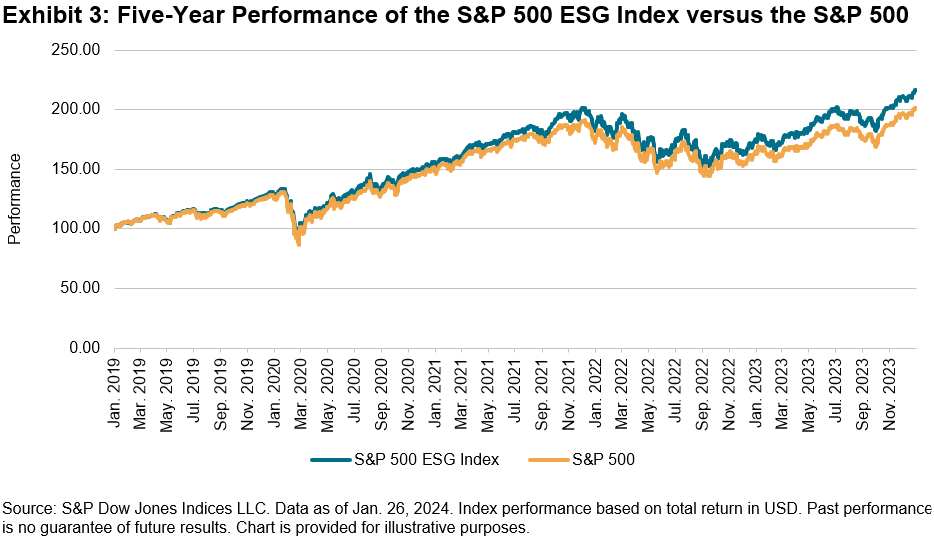
Transparency Drives the Free Market
ESG epitomizes the essence of transparency in free markets, offering investors a clear view of the risks and opportunities inherent in their potential investments. This level of clarity is indispensable for informed decision-making and strategic investment.
The Bottom Line: ESG as Strategic Business Wisdom
ESG embodies a pragmatic, forward-thinking approach to business, rather than a political tool. By viewing ESG integration as an investment rather than a cost, companies can significantly reduce expenses related to energy, employee turnover, and legal challenges. The real cost lies in overlooking the strategic value ESG brings to the table.
Take Action
Ready to deepen your understanding of ESG and its impact on your business? Explore our resources to gain insights and strategies for integrating ESG principles into your operations. Start your journey toward sustainability and resilience today by visiting:
Understanding ESG Data: The What, Why, and How
Transform your business practices for the better. Contact an ESG Expert and begin making a tangible difference through strategic ESG integration.



Subscribe To Our Blog Newsletter
Keep yourself ahead of the curve with the latest utility news, trends, & resources.
Editor's Picks

Installing EV Charging Stations: A Guide for Multifamily Property Owners
Have there always been this many electric vehicles on the road? It looks like the silent hum of an EV has become a roar, as Electric vehicles take the United States by storm. With the rise of EVs, comes the…
Policy Watch: Compliance & Building Readiness with Brett Kraus and Michelle Winters
Policy Watch: Compliance & Building Readiness with | RSS.com In this episode of Utility Wisdom, Michelle Winters, Vice President of Sustainability Sales at Conservice, sits down with Brett Kraus, Senior Legal Counsel, and Katie Piel, Sustainability Manager, to break down…
Conservice Earns 15th Appearance on Inc. 5000
RIVER HEIGHTS, Utah, August 14, 2026 – Conservice, the nation’s leading utility management provider, has been named to the 2026 Inc. 5000, marking the company’s 15th appearance on the annual list of America’s fastest-growing private companies. The recognition adds another…

5 Signs Your Telecom Strategy Needs An Update
Telecom has a funny way of becoming someone’s problem. A resident can’t get connected, so they call the onsite property team. A provider needs an answer, so someone digs through an old agreement. A renewal date appears on the calendar,…

How to Streamline Invoice Processing & Auditing
Utility bills have a lot to say. They can tell you where costs are climbing and where usage looks unusual. They can point to a provider error before it hits your bottom line. And across hundreds or thousands of accounts,…

Ask An Expert with Sustainability Expert, Sandra Closson
Meet Sandra Closson Some people see spreadsheets full of utility data. Sandra sees a story about how a building operates and where it can improve. With nearly three decades of professional experience and 17 years in sustainability, Sandra has built…

The Next Chapter of Single Family Operations
At some point “more” stops being the answer. The single family industry has spent the last decade defining success as growth. Build new properties, acquire existing properties, attract institutional investment, repeat. Portfolios grew from hundreds of homes to thousands. “More”…

RUBS Utility Billing vs. Submetering: A Decision Guide
RUBS Utility Billing vs. Submetering A Decision Gu | RSS.com TL;DR: Not every property gets to choose between RUBS and submetering – your building, budget, and state regulations all play a role. RUBS (Ratio Utility Billing System) is faster and…

NAA 2026 Debrief: AI Everywhere, Automation Under Pressure, and the Human Work of Multifamily
NAA 2026 Debrief: AI Everywhere, Automation Under | RSS.com Attending this year’s Apartmentalize (which was truly excellent, by the way), you couldn’t help but notice a contrast. On the one hand, the vendor floor was an absolute sea of AI…
Inside Multifamily with NAA President & CEO Bob Pinnegar
Inside Multifamily with NAA President & CEO Bob Pi | RSS.com Conservice’s Lauren Howard sits down with National Apartment Association President and CEO Bob Pinnegar to discuss the current state of the rental housing industry. From supply and affordability challenges…
Experience Effortless Utility Management and Cost Savings
Connect with us today to discover how our solutions can ease tenant billback, streamline utility management, and reduce your costs and energy usage. Make your utility management smarter and more efficient with Conservice!