
Under the right circumstances, pressure creates diamonds.
In multifamily housing, today’s operating pressure may have the right circumstances for a similar transformation. Rising utility costs, tighter margins, and increased regulatory scrutiny are pushing property managers to uncover efficiencies they may have overlooked in the past.
One common culprit is vacant unit utility billing. When utilities remain in the property’s name after move-in or are disconnected too early at move-out, the property ends up paying for consumption that should belong to the resident. These overlooked charges quietly accumulate and erode NOI.
Enter the diamond: Vacant Cost Recovery (VCR).
By identifying and recapturing utility charges for units that appear vacant on utility accounts but are actually occupied, VCR shines, closing billing gaps and protecting NOI.
Vacant Theft vs. True Vacant Usage
Not all vacant utility usage is the same.
Some consumption occurs during legitimate vacancy periods such as apartment turns, maintenance work, or model unit operations. These expenses are expected and often fall under turn cost apartment budgeting.
Other situations involve occupied units that still have utilities billed to the property. This scenario, often called vacant theft, occurs when a resident delays transferring service into their name.
Knowing the difference between legitimate usage and recoverable resident consumption is what makes a strong VCR program.
The Business Impact: Where Vacant Costs Erode NOI
Common Scenarios That Create Vacant Costs
Several everyday situations create recoverable utility charges.
Residents may delay establishing service after move-in. Others disconnect utilities too early during move-out. In some cases, utility providers may not process an account transfer correctly.
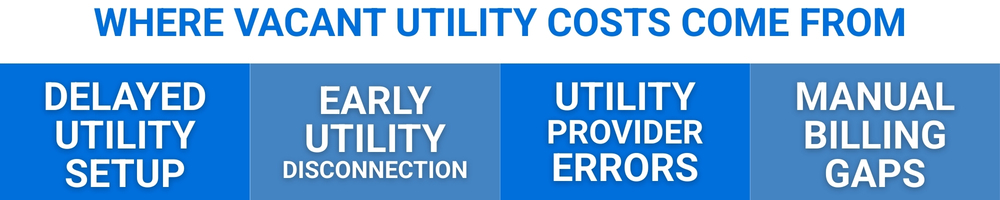
When circumstances like these happen, utilities remain billed to the property even though the unit is occupied and property teams are left eating the cost.
How Fast Vacant Costs Add Up
A single apartment unit typically generates utility costs of $144/month. Across a large portfolio, even a small number of units with incorrect vacant unit utility billing can create significant annual losses.
This is why many operators now treat utility management as a strategic budget category rather than simply an operational task. As discussed in Utilities Need a Seat at Your Next Budget Meeting, utilities increasingly play a central role in financial planning.
Operational and Resident Experience Impacts
Besides hurting your NOI, unrecovered utility costs also create operational challenges. On-site teams often spend hours manually reviewing invoices, comparing utility accounts to rent rolls, and contacting providers to resolve discrepancies.
Late discoveries can also lead to large back-bills for residents, creating confusion and frustration. A proactive VCR program reduces these issues by identifying billing gaps early.
Technology-Driven VCR: Automation is the Name of the Game
Vacant Cost Recovery doesn’t work solo. It relies on technology and automation.
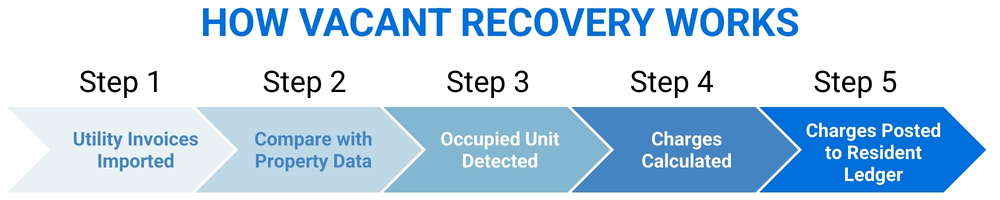
Here’s how it works: utility invoices are imported into a utility expense management platform and compared against the property’s rent roll and move-in or move-out data. When a unit appears occupied but utilities remain in the community’s name, the system flags the discrepancy.
From there, charges can be prorated based on the resident’s occupancy dates and posted to the resident ledger.
By utilizing automation, properties can identify vacant unit utility billing errors quickly instead of discovering them months later.
2026 Compliance Landscape for Vacant Cost Recovery
Utility billing rules vary widely across states and municipalities. These regulations may include requirements related to fee transparency, billing disclosures, and how costs can be allocated to residents.
Because vacant unit utility billing involves resident charges, properties must ensure recovery programs align with applicable regulations.
Compliance safeguards help protect both the property and its residents.
Key Compliance Considerations
Successful VCR programs typically include:
- Clear lease language outlining resident responsibility for utilities.
- Transparent billing that explains any recoverable charges.
- Reasonable grace periods that allow residents time to establish service.
Accurate documentation is also essential. Maintaining clear records of billing periods, move-in dates, and proration calculations helps create a reliable audit trail.
Many operators rely on utility management partners to monitor regulatory changes and adjust billing programs accordingly.
Measuring VCR Success with Key Metrics
Property managers often track several metrics to evaluate VCR performance:
- Percentage of vacant utility charges recovered.
- Average time between utility invoice receipt and resident billing.
- Reduction in property-paid utility expenses.
- Frequency of vacant unit utility billing discrepancies.
These metrics provide insight into both operational performance and financial recovery. Not seeing the metrics you’d like? It may be time to reevaluate your strategy.
Build a Stronger Vacant Cost Recovery Strategy
Vacant Cost Recovery helps close the gap between utility usage and billing. With the right systems in place, property managers can identify recoverable costs earlier, improve operational efficiency, and reduce unnecessary expenses.Many operators implement VCR as part of a broader expense recovery strategy designed to identify hidden costs across utility operations. Learn more about how this works through Conservice’s Expense Recovery solutions.



Subscribe To Our Blog Newsletter
Keep yourself ahead of the curve with the latest utility news, trends, & resources.
Editor's Picks

Retain Residents Longer with Transparent, Fair Utility Billing
Improve resident retention with transparent utility billing. Build trust, increase resident satisfaction, reduce disputes, and support lease renewals with fair billing practices.

Power in Partnership: Building a Real Estate Tech Ecosystem That Works
More tech doesn’t always mean a better resident experience. The true potential lies not in individual tools, but in how they work together. From internet to access control, smart home tech to resident experience platforms, properties rely on a growing…

2026 Building Performance Standards Compliance by City
Stay ahead of 2026 building performance standards like Local Law 97. Track city deadlines, understand penalties, upgrade properties, and take action to stay compliant.

Good Data In, Good Data Out: The Key To Turn Season
It’s that time of year again for student housing. Move-outs are piling up nearly as fast as move-ins and student housing operators and property teams have just a few short weeks to get it all sorted before the next wave…

Improving Resident Experience Through Connectivity: 4 Reasons Bulk Internet Actually Works
Multifamily owners and operators are rethinking how connectivity is delivered. Bulk internet programs are becoming an increasingly valuable solution.

Conflict in Iran Affects Utility Costs
The situation in Iran is already having measurable economic effects. While much of the attention has focused on geopolitical implications, the financial impact on consumers is becoming increasingly clear. At the time of this publication, U.S. consumers have absorbed an…

A Practical Way to Prioritize Climate Risk Across Your Portfolio [Rent at Risk: Part 3]
Climate risk analysis produces a long list of exposures across assets and markets, but it does not always produce a clear path forward. How should you leverage and prioritize available data?

Utility University: March 2026
Utility costs are rising but this isn’t just another temporary spike. From increasing energy demand to the growing role of internet as essential infrastructure, the utility landscape is evolving fast. Here’s what property teams need to know to stay ahead.

The ROAD to Housing Act: What It Means for Supply, Renters, and Operators
The Senate passed the ROAD to Housing Act on March 12 with an 89-10 vote. That kind of margin is rare, especially for something as complex as housing policy. On paper, that kind of support should signal momentum. In reality, it highlights something more interesting.

What 650 Property Audits Revealed About Utility Rate Misalignment
Most utility bills are treated as a given. They arrive, they’re processed, and they’re paid. In some cases, they’re allocated or passed through to residents, but structurally, they are rarely questioned. Utilities tend to sit in the category of “fixed”…
Experience Effortless Utility Management and Cost Savings
Connect with us today to discover how our solutions can ease tenant billback, streamline utility management, and reduce your costs and energy usage. Make your utility management smarter and more efficient with Conservice!