
Senior living operations exist for one main reason: to support residents. Every role, every process, and every decision ultimately serves people, not just systems. That focus is what makes the industry unique. And it’s also what makes operational strain show up more quickly when something falls out of balance.
Today, senior living communities are growing. Demand continues to rise while new supply remains measured. Portfolios are expanding, occupancy is climbing, and operators are being asked to do more without adding layers of staff or complexity.
Through all of this, utilities have rarely been part of the strategic conversation.
That’s because utilities don’t announce themselves as a problem. They accumulate quietly. Another invoice to review. Another provider question to answer. Another exception that needs follow-up. Over time, those moments add up, pulling attention away from teams whose time is already divided between residents, families, compliance requirements, and daily operations.
For an industry built around care and service, that matters.
An Industry Made Up of Distinct Models, Not One Single Playbook
Senior living is not a single operating model. Independent living, active adult, assisted living, memory care, skilled nursing, and continuing care communities all operate differently, with distinct staffing structures, service expectations, and cost considerations.

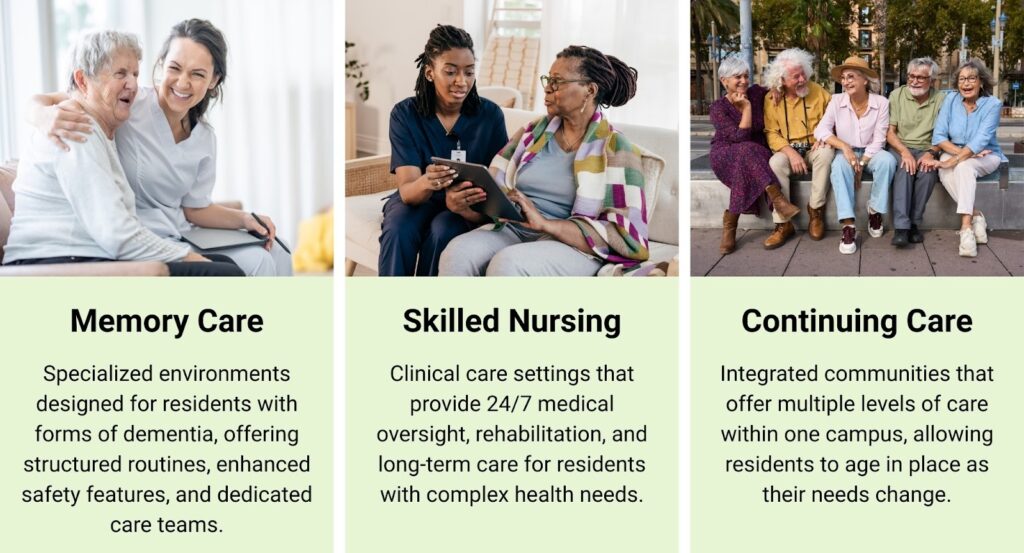
That diversity has shaped how utilities are handled. There was never a clear “right” way to manage them, only what felt manageable at the time. In many communities, utilities stayed internal because that was the simplest option. As portfolios grew, some operators layered in bill pay services to reduce manual work without fully changing the process.
What’s missing from both approaches is a defined utility strategy.
Utilities are treated as a necessary task rather than an operational system, even as the volume, complexity, and impact continue to increase.
Managing Utilities In-House: Familiar, But Costly
When utilities are managed internally, the work rarely sits with one person or team. Invoices arrive through multiple channels. Charges must be reviewed, coded, approved, and paid. When something looks wrong, staff follow up with providers while juggling their primary responsibilities.
The cost of this approach isn’t always obvious. It shows up as staff time absorbed into administrative work, late fees tied to missed or delayed payments, compliance risk as regulations change, and growing reliance on disconnected software and spreadsheets to keep everything moving.
In senior living, where staff attention is already at a premium, these hidden costs add up.
Why Bill Pay Add-Ons Only Solve Part of the Problem
Bill pay services are often introduced as a practical middle ground. Payments are handled externally, which removes one step from the process and reduces some day-to-day friction.
But bill pay stops at the payment.
- Invoices still need to be reviewed
- Discrepancies still require investigation
- Provider errors still need resolution
- Usage data still lacks structure for budgeting, forecasting, or long-term planning
- Compliance responsibility still sits with you, the operator
In practice, bill pay changes how a task is completed, not how much work the task creates.
For teams already stretched thin, that distinction becomes clear quickly.
A Different Way to Think About Utilities
Full-service utility management takes a different view. Instead of asking senior living teams to manage utilities alongside everything else, it treats utilities as a defined operational function with clear ownership, accountability, and systems.
At Conservice, that means managing the entire utility lifecycle under one partner. Invoices are captured, audited, and paid accurately. Exceptions are resolved directly with providers. Contracts, meters, and compliance requirements are actively monitored. Data is centralized so leaders can see trends, plan budgets, and make informed decisions without chasing information.
Most importantly, this work happens behind the scenes. Staff stay informed without being responsible for every step, allowing them to focus on residents rather than administrative follow-up.
Why This Model Fits Senior Living Teams
Senior living demands more from staff than almost any other real estate segment. Front desk teams, managers, and caregivers balance service, safety, and experience every day.
Every additional task competes with that mission.
Full-service utility management is designed to remove work, not shift it. It creates consistency across communities, supports compliance across jurisdictions, and provides operational clarity as portfolios grow, without asking on-site teams to absorb more responsibility.
What This Foundation Makes Possible Next
Historically, most senior living communities have not billed utilities back to residents. The administrative burden was too high, and the systems required to do it responsibly weren’t in place.
With full-service utility management and modern platforms, that limitation is beginning to change, particularly for active adult and independent living communities. Utility billback becomes possible not as a standalone initiative, but as part of a connected, well-managed system.
It’s not the starting point. It’s a capability enabled by doing the foundational work correctly.
Utilities Should Support the Mission, Not Complicate It
Senior living teams exist to serve residents. Every operational decision should reinforce that focus.
A structured, full-service approach to utility management reduces administrative noise, improves financial clarity, and gives operators the confidence to scale without sacrificing control. It brings utilities out of the background and into a role that actively supports long-term performance. Learn more about how Conservice supports utility management for senior living communities.



Subscribe To Our Blog Newsletter
Keep yourself ahead of the curve with the latest utility news, trends, & resources.
Editor's Picks

Retain Residents Longer with Transparent, Fair Utility Billing
Improve resident retention with transparent utility billing. Build trust, increase resident satisfaction, reduce disputes, and support lease renewals with fair billing practices.
Power in Partnership: Building a Real Estate Tech Ecosystem That Works
More tech doesn’t always mean a better resident experience. The true potential lies not in individual tools, but in how they work together. From internet to access control, smart home tech to resident experience platforms, properties rely on a growing…

2026 Building Performance Standards Compliance by City
Stay ahead of 2026 building performance standards like Local Law 97. Track city deadlines, understand penalties, upgrade properties, and take action to stay compliant.

Good Data In, Good Data Out: The Key To Turn Season
It’s that time of year again for student housing. Move-outs are piling up nearly as fast as move-ins and student housing operators and property teams have just a few short weeks to get it all sorted before the next wave…

Improving Resident Experience Through Connectivity: 4 Reasons Bulk Internet Actually Works
Multifamily owners and operators are rethinking how connectivity is delivered. Bulk internet programs are becoming an increasingly valuable solution.

Conflict in Iran Affects Utility Costs
The situation in Iran is already having measurable economic effects. While much of the attention has focused on geopolitical implications, the financial impact on consumers is becoming increasingly clear. At the time of this publication, U.S. consumers have absorbed an…

A Practical Way to Prioritize Climate Risk Across Your Portfolio [Rent at Risk: Part 3]
Climate risk analysis produces a long list of exposures across assets and markets, but it does not always produce a clear path forward. How should you leverage and prioritize available data?

Utility University: March 2026
Utility costs are rising but this isn’t just another temporary spike. From increasing energy demand to the growing role of internet as essential infrastructure, the utility landscape is evolving fast. Here’s what property teams need to know to stay ahead.

The ROAD to Housing Act: What It Means for Supply, Renters, and Operators
The Senate passed the ROAD to Housing Act on March 12 with an 89-10 vote. That kind of margin is rare, especially for something as complex as housing policy. On paper, that kind of support should signal momentum. In reality, it highlights something more interesting.

What 650 Property Audits Revealed About Utility Rate Misalignment
Most utility bills are treated as a given. They arrive, they’re processed, and they’re paid. In some cases, they’re allocated or passed through to residents, but structurally, they are rarely questioned. Utilities tend to sit in the category of “fixed”…
Experience Effortless Utility Management and Cost Savings
Connect with us today to discover how our solutions can ease tenant billback, streamline utility management, and reduce your costs and energy usage. Make your utility management smarter and more efficient with Conservice!