Preventing Losses from Errors, Theft, and Oversight.
Utilities don’t always tell the whole truth. At least not without a little verification. Between billing errors, meter issues, and missed rate updates, it’s easy for even the most diligent property teams to take inaccurate data at face value. The challenge isn’t a lack of effort; it’s the sheer volume and complexity of utility management itself.
Across water, gas, electricity, internet, and waste, a single property can generate thousands of utility bills each year. Scale that across an entire portfolio, and you’re suddenly looking at tens of thousands of invoices, each with its own rate structure, service date, and potential for error. Even with the most organized teams, small discrepancies slip through. And when they do, they quietly chip away at NOI.
Utilities are one of the top three controllable expenses for multifamily operators, accounting for roughly 15–20% of a property’s operating costs. When managed well, utilities can be a lever for efficiency and profitability. When neglected, even minor inaccuracies can slowly erode financial performance.
What’s often surprising is that these losses rarely come from outright fraud. They usually stem from data errors, process gaps, or inconsistent oversight. Incorrect rate schedules, faulty meters, and outdated account setups can each create recurring costs that compound across a portfolio.
For operators, protecting utility revenue starts with maintaining clear visibility into billing, metering, and provider data. Consistent validation not only safeguards financial performance but also strengthens compliance and investor confidence.
Where Utility Revenue Slips Away
Utility revenue loss isn’t always obvious. It’s not a missing bill or a glaring overcharge, but the quiet drift of accuracy over time. Here are the most common ways it happens:
Billing and rate errors
- Outdated rate schedules or incorrect tariff assignments cause overbilling.
- Provider data changes that never make it into the property’s accounting system.
Meter inaccuracies
- Faulty or shared submeters that blur the line between resident and common-area consumption.
- Misreads that cause usage to be over- or under-allocated.
Vendor and data errors
- Missed utility transfers during acquisitions or resident move-ins.
- Duplicate invoices or misapplied credits.
Operational inefficiencies
- Leaks, malfunctioning equipment, or systems that run outside peak hours.
- Water or energy waste that shows up as resident usage but goes unresolved.
Intentional misuse
- Rare, but possible. Unauthorized connections or tampered meters can still occur, especially in older communities without consistent monitoring.
Even a small margin of error can have a measurable financial impact. A 1% billing discrepancy across a 1,000-unit portfolio can cost tens of thousands of dollars each year. Beyond direct losses, inaccurate data affects financial reporting, sustainability benchmarking, and compliance submissions. Over time, those discrepancies weaken forecasting and budget reliability.
Utilities should be treated as a strategic financial lever, not a pass-through expense. Operators who manage them proactively protect both NOI and long-term asset value.
How to Identify and Prevent Utility Loss
The most effective way to prevent revenue loss is to combine automation, regular audits, and team awareness. Conservice performs these steps daily for clients, but many of the same principles can apply to any operation.
Start with scheduled audits
Set a quarterly or semiannual utility audit to verify rate accuracy, meter alignment, and provider account data. These reviews catch early warning signs before they compound.
Track vacant-unit usage
Monitor for unexpected consumption when units are unoccupied. This is one of the easiest ways to detect leaks or system inefficiencies.
Automate validation
Use technology to flag unusual spikes or billing discrepancies. Automated bill validation software can eliminate manual entry errors and alert your team to anomalies in real time.
Train on-site teams
Your property staff are the first line of defense. Train them to recognize unusual consumption patterns, recurring credits, or discrepancies between billed and actual usage.
Document every adjustment
Keep a consistent log of all credits, provider updates, and rate changes. Documentation not only supports compliance but also creates transparency across departments.
Building a Strong Utility Management Process
So, how do you go about creating an operational process that prevents errors from happening?
Centralize your utility data
Consolidate invoices, usage records, and provider communications in one system. This makes portfolio-wide auditing faster and more accurate.
Integrate key departments
Finance, maintenance, and sustainability teams all depend on accurate utility data. Align their reporting so they share one consistent view of usage and spend.
Adopt smart metering and IoT tools
Digital meters and monitoring systems make it easier to detect irregularities before they escalate. They also give operators near real-time visibility into property performance.
Conduct independent audits annually
Even with internal checks, third-party audits help verify accuracy and identify missed opportunities for recovery.
Leverage end-to-end managed utilities
Conservice simplifies all of this through utility management. With everything from data collection to resident billing in a single system, operators gain complete visibility and confidence that every charge and rate is accurate. For a deeper look, check out the industry’s evolution to managed utilities.
Recognizing Rare but Real Risks
While most utility loss is accidental, there are occasional cases of fraudulent activity or deceptive utility practices. Scams targeting residents or property teams often come disguised as official notices or payment requests.
Protecting your revenue also means protecting your people. Make sure on-site staff and residents know how to verify the legitimacy of any utility-related communication. Conservice’s Utility Scams Guide outlines common red flags and ways to stay safe.
Awareness is a simple but powerful layer of protection.
The Takeaway
Utility loss rarely happens all at once. It builds slowly, through missed details and unverified data. The good news is that prevention is entirely within reach.
Key reminders for operators:
- Most utility loss stems from oversight, not fraud.
- Regular audits and automated validation catch issues early.
- Visibility and documentation support both financial and ESG performance.
- Treating utilities as an active management priority strengthens NOI and resident trust.
Protect Your NOI with Greater Utility Visibility
Conservice helps property owners and managers protect utility revenue with automated validation, usage monitoring, and expert oversight. Our team finds and resolves billing discrepancies before they impact your financial performance.



Subscribe To Our Blog Newsletter
Keep yourself ahead of the curve with the latest utility news, trends, & resources.
Editor's Picks

Broadband Summit 2026 Debrief: The Infrastructure of Connectivity
Telecom strategy used to be limited to a few baseline questions: Who is the provider? What speeds do they offer? And are they offering the best rate? That was often the extent of the decision-making process. Walking out of Broadband…
Scaling Senior Living with Justin Brady
Scaling Senior Living with Justin Brady | RSS.com Who manages the utilities at a senior living community? Often, it’s a business manager or bookkeeper who is also juggling resident enrollment, retention, and day-to-day community operations. Lauren Howard sits down with…

Rental Junk Fee Laws in 2026: What Utility Billing Teams Need to Know
TL;DR: Fee transparency law is tightening in 2026, and most of the new rules target disclosure, not the formulas billing teams use to calculate a utility bill-back. This guide breaks down what counts as a junk fee, where disclosure rules…

Conservice’s 2nd Annual 5K Brings Together More Than 500 Participants and Gives Back to Cache Valley
LOGAN, Utah — September 10, 2026 — Conservice celebrated its second annual 5K Fun Run on September 9, bringing employees, families, and community partners together for an afternoon of connection and giving back. More than 550 people registered for this…

The How-to Guide for Reducing CAM Charges and Shared Space Costs
TL;DR When investigating where to reduce CAM charges and multifamily common-area costs, shared utility expenses might be the place to start. A higher bill doesn’t automatically signal waste, so it’s important to compare cost and consumption before deciding where to…

Installing EV Charging Stations: A Guide for Multifamily Property Owners
Have there always been this many electric vehicles on the road? It looks like the silent hum of an EV has become a roar, as Electric vehicles take the United States by storm. With the rise of EVs, comes the…
Policy Watch: Compliance & Building Readiness with Brett Kraus and Michelle Winters
Policy Watch: Compliance & Building Readiness with | RSS.com In this episode of Utility Wisdom, Michelle Winters, Vice President of Sustainability Sales at Conservice, sits down with Brett Kraus, Senior Legal Counsel, and Katie Piel, Sustainability Manager, to break down…
Conservice Earns 15th Appearance on Inc. 5000
RIVER HEIGHTS, Utah, August 14, 2026 – Conservice, the nation’s leading utility management provider, has been named to the 2026 Inc. 5000, marking the company’s 15th appearance on the annual list of America’s fastest-growing private companies. The recognition adds another…

5 Signs Your Telecom Strategy Needs An Update
Telecom has a funny way of becoming someone’s problem. A resident can’t get connected, so they call the onsite property team. A provider needs an answer, so someone digs through an old agreement. A renewal date appears on the calendar,…
How to Streamline Invoice Processing & Auditing
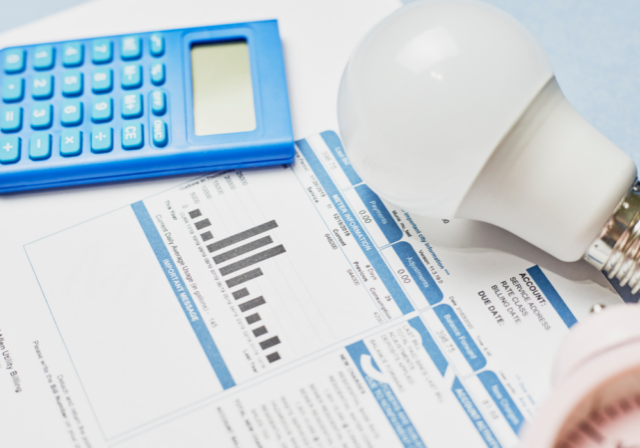
Utility bills have a lot to say. They can tell you where costs are climbing and where usage looks unusual. They can point to a provider error before it hits your bottom line. And across hundreds or thousands of accounts,…
Experience Effortless Utility Management and Cost Savings
Connect with us today to discover how our solutions can ease tenant billback, streamline utility management, and reduce your costs and energy usage. Make your utility management smarter and more efficient with Conservice!