
Under the right circumstances, pressure creates diamonds.
In multifamily housing, today’s operating pressure may have the right circumstances for a similar transformation. Rising utility costs, tighter margins, and increased regulatory scrutiny are pushing property managers to uncover efficiencies they may have overlooked in the past.
One common culprit is vacant unit utility billing. When utilities remain in the property’s name after move-in or are disconnected too early at move-out, the property ends up paying for consumption that should belong to the resident. These overlooked charges quietly accumulate and erode NOI.
Enter the diamond: Vacant Cost Recovery (VCR).
By identifying and recapturing utility charges for units that appear vacant on utility accounts but are actually occupied, VCR shines, closing billing gaps and protecting NOI.
Vacant Theft vs. True Vacant Usage
Not all vacant utility usage is the same.
Some consumption occurs during legitimate vacancy periods such as apartment turns, maintenance work, or model unit operations. These expenses are expected and often fall under turn cost apartment budgeting.
Other situations involve occupied units that still have utilities billed to the property. This scenario, often called vacant theft, occurs when a resident delays transferring service into their name.
Knowing the difference between legitimate usage and recoverable resident consumption is what makes a strong VCR program.
The Business Impact: Where Vacant Costs Erode NOI
Common Scenarios That Create Vacant Costs
Several everyday situations create recoverable utility charges.
Residents may delay establishing service after move-in. Others disconnect utilities too early during move-out. In some cases, utility providers may not process an account transfer correctly.
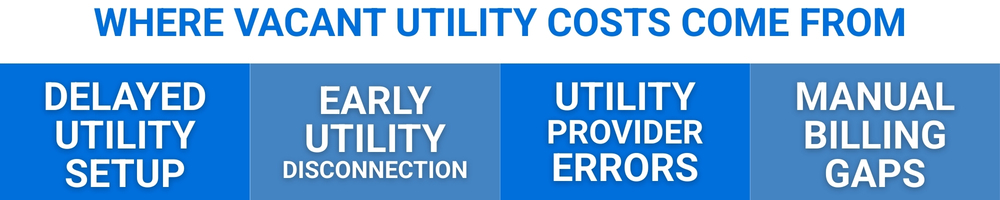
When circumstances like these happen, utilities remain billed to the property even though the unit is occupied and property teams are left eating the cost.
How Fast Vacant Costs Add Up
A single apartment unit typically generates utility costs of $144/month. Across a large portfolio, even a small number of units with incorrect vacant unit utility billing can create significant annual losses.
This is why many operators now treat utility management as a strategic budget category rather than simply an operational task. As discussed in Utilities Need a Seat at Your Next Budget Meeting, utilities increasingly play a central role in financial planning.
Operational and Resident Experience Impacts
Besides hurting your NOI, unrecovered utility costs also create operational challenges. On-site teams often spend hours manually reviewing invoices, comparing utility accounts to rent rolls, and contacting providers to resolve discrepancies.
Late discoveries can also lead to large back-bills for residents, creating confusion and frustration. A proactive VCR program reduces these issues by identifying billing gaps early.
Technology-Driven VCR: Automation is the Name of the Game
Vacant Cost Recovery doesn’t work solo. It relies on technology and automation.
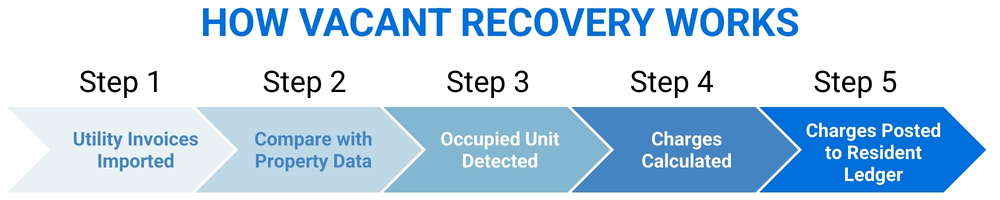
Here’s how it works: utility invoices are imported into a utility expense management platform and compared against the property’s rent roll and move-in or move-out data. When a unit appears occupied but utilities remain in the community’s name, the system flags the discrepancy.
From there, charges can be prorated based on the resident’s occupancy dates and posted to the resident ledger.
By utilizing automation, properties can identify vacant unit utility billing errors quickly instead of discovering them months later.
2026 Compliance Landscape for Vacant Cost Recovery
Utility billing rules vary widely across states and municipalities. These regulations may include requirements related to fee transparency, billing disclosures, and how costs can be allocated to residents.
Because vacant unit utility billing involves resident charges, properties must ensure recovery programs align with applicable regulations.
Compliance safeguards help protect both the property and its residents.
Key Compliance Considerations
Successful VCR programs typically include:
- Clear lease language outlining resident responsibility for utilities.
- Transparent billing that explains any recoverable charges.
- Reasonable grace periods that allow residents time to establish service.
Accurate documentation is also essential. Maintaining clear records of billing periods, move-in dates, and proration calculations helps create a reliable audit trail.
Many operators rely on utility management partners to monitor regulatory changes and adjust billing programs accordingly.
Measuring VCR Success with Key Metrics
Property managers often track several metrics to evaluate VCR performance:
- Percentage of vacant utility charges recovered.
- Average time between utility invoice receipt and resident billing.
- Reduction in property-paid utility expenses.
- Frequency of vacant unit utility billing discrepancies.
These metrics provide insight into both operational performance and financial recovery. Not seeing the metrics you’d like? It may be time to reevaluate your strategy.
Build a Stronger Vacant Cost Recovery Strategy
Vacant Cost Recovery helps close the gap between utility usage and billing. With the right systems in place, property managers can identify recoverable costs earlier, improve operational efficiency, and reduce unnecessary expenses.Many operators implement VCR as part of a broader expense recovery strategy designed to identify hidden costs across utility operations. Learn more about how this works through Conservice’s Expense Recovery solutions.



Subscribe To Our Blog Newsletter
Keep yourself ahead of the curve with the latest utility news, trends, & resources.
Editor's Picks

New Rules. Same Old Trash. Ask an Expert with Tedd Schonsheck
Meet Tedd Schonsheck: Waste strategist. Former Army officer. Recovering retail executive. Now, he’s one of the people dedicated to making sure trash actually works for property owners and managers.

Climate Risk Is Now a Portfolio Allocation Question, Not a Reporting Exercise
A practical framework for screening climate risk in multifamily portfolios and identifying market and asset hotspots.

Keep the Heat On: Utility Assistance Resources for Property Teams This Winter
Record-breaking cold across the East is driving heating costs higher and putting pressure on residents and property teams alike.. Meanwhile, in our headquarters in Utah, we’re still scanning the mountains for snow (we’re not bitter). But across the country, winter…

Exploring the YoY Energy Price Hikes
Why Doing Everything Right Still Costs More First the lightning. Then the thunderclap. Right? The lightning. Over the last 18 months, AI, in all of its many and emerging forms, roared across the U.S. And while cultural and enterprise hesitance…
Onboard Is Now Conservice Internet Management
Since 2017, Onboard has been singularly focused on transforming how internet is delivered, supported, and monetized in the real estate industry. We’ve built a platform that simplifies bulk and non-bulk internet programs for owners, enhances the resident experience, and drives…

Senior Living Runs on Care (and Careful Utility Management)
Senior living operations exist for one main reason: to support residents. Every role, every process, and every decision ultimately serves people, not just systems. That focus is what makes the industry unique. And it’s also what makes operational strain show up more quickly when something falls out of balance.

The NOI Drain You Can’t See: How Utility Billing Errors Quietly Undermine Portfolio Performance
Identify and recover hidden utility billing errors that quietly drain NOI. Learn how a utility bill audit, automation, and expert review improve budget accuracy across multifamily and commercial portfolios.

Mid-Lease Enrollments: You’ve Signed a Bulk Internet Contract—Now What?
Signing an internet management contract is a big step forward. You’ve secured better pricing, guaranteed service levels, and one of the most in-demand amenities for your residents. But once the ink is dry, the real work begins: getting residents enrolled.

What the 2026 GRESB Updates Mean: Our Observations on the Key Shifts
Change is on the horizon. The 2026 GRESB Real Estate Standard marks a decisive move toward measurable, performance-based climate action. Rather than incremental adjustments, these updates focus attention on the issues that most directly shape long-term value and resilience. GRESB…

California AB1414: New Bulk Internet Opt-Out Law—What You Need to Know
New Requirements Go Into Effect January 1, 2026 California has officially passed AB1414, a bill that changes how property owners and operators can offer bulk internet services to residents. Beginning January 1, 2026, property owners must allow residents the ability…
Experience Effortless Utility Management and Cost Savings
Connect with us today to discover how our solutions can ease tenant billback, streamline utility management, and reduce your costs and energy usage. Make your utility management smarter and more efficient with Conservice!