
Centralization. Google it as a business intelligence concept in 2023, and you’ll see a search engine results page with as many different definitions as there are entries. In the property management space, it’s joined its cousins “innovation,” “automation,” and “AI-assisted” on the list of popular tech buzzwords. And like its friends on the list, Centralization is buzzing for a reason.
It makes space and solves problems.
At NAA Apartmentalize this year, deep in the heart of Atlanta, Georgia, the vendor hall buzzed with the familiar carnival spread of industry titans and small hawking vendors. From pet waste DNA analysis to affordable housing redesigns and even one (outstanding) managed-utilities Conservice booth, vendors lined up to hawk their wares while the aisles flowed with property managers, landlords, and maintenance professionals.
But encircling that vendor hall, widely attended breakout sessions, think tanks, and sales meetings crunched industry trends and planned for the future. And again and again, the presentations orbited that nebulous concept: centralization.
It wasn’t what the conference was about. But the key takeaways from multifamily industry leaders—the widespread industry obstacles and areas of opportunity discussed—tended to orbit the term.
And what did all those meetings and presentations teach us about centralization? That it’s a marriage of process consolidation and AI-assisted automation. Essentially, for the multifamily industry, centralization involves moving away from individual, property-based leasing and operational teams and into centralized, automated regional locations to improve efficiencies and cut down costs.
It’s two key facets?
- Infrastructural: Consolidating teams and responsibilities in order to streamline collaboration and increase efficiency
- AI-assistance: The process of automating repetitive or menial tasks in order to free up humans to do the thinky-thinky work.
Staffing Shortages and Centralization
There’s nothing new under the sun, right? Utility providers all over the nation are inflicting mail delays and long hold times, industry vendors are haggling over talent, and as it turns out, property management firms across the board are struggling with employee turnover and/or recruiting. The post-covid employee runoff has slowly transformed our industry into a long war of attrition, and one of the solutions to that attrition appears to be centralization.
In a live poll at NAA (which was attended by more than ten thousand people, by the way), 88% of attendees said that staffing is their most significant challenge, and 61% indicated that turnover was increasing.
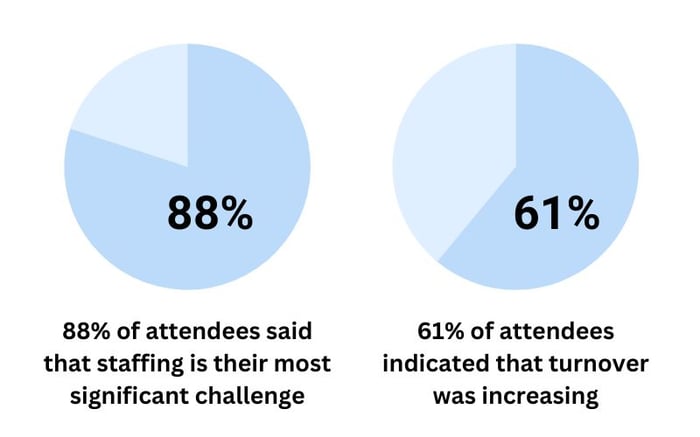
The fact is, the rise of entry level wages puts pressure on low to mid-tier positions throughout our industry. Now that we’re competing with fast food chains for the same pool of talent, multifamily has to differentiate its roles and responsibilities or prepare to offer substantially higher wages.
The key takeaway from several of NAA’s sessions this year was that centralization offers a meaningful solution to this issue for two different reasons:
Reason 1: Robots Can Fill the Gaps
Responsibilities like new prospect ingestion, initial tours, and resident qualification filtering has historically required a lot of manpower at a relatively low wage. According to several polls and presentations throughout the conference, the dearth of workers has made attending these critical responsibilities challenging, and higher level, better compensated employees have had to jump in to fill the gaps. It leads to less efficient processes, less productive talent, and inevitably a higher turnover rate as key employees seek work that meets their caliber.
AI-assistance and automation, like chatbots capable of moving new prospects through the qualification process automatically or Conservice’s own automated utility bill vetting, is sophisticated and reliable enough to step in where full time workers used to be required. This aspect of centralization—automating front end tasks, reduces the pressure on your team and helps you scale. A centralized body of automating tech is MUCH easier to leverage as your company grows than constantly increasing staff.
Learn how to automate and centralize your utilities.
Reason 2: Robot Friends Let Your Staff Do the Good Work
The fact is, today’s workforce is a lot less willing to engage with highly repetitive, high frequency work than in the past. A key aspect of centralization, maybe its most important benefit, is the increase in quality work it facilitates.
- Virtual tours help prospective residents filter out the units they’re not interested in before one of your talented team members commits to actually, physically walking them through a space.
- Managed-utilities services remove the repetitive, painstaking work of paying bills, auditing them for accuracy, and dealing with disconnects off of your accounting staff.
- Chatbots filter out the top 90% most common, easy-to-answer queries and make space for your professionals to engage with the more nuanced, interesting questions.
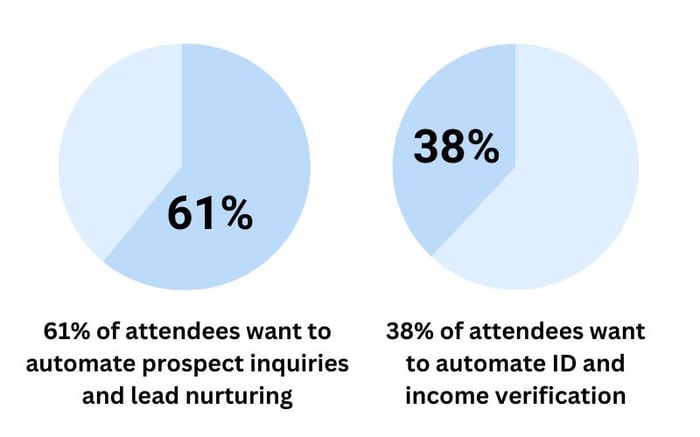
In another live poll, 61% of NAA attendees indicated that the facet of their business they’re most likely to automate first is prospect inquiries and lead nurturing. 38% indicated they’d like to automate ID and income verification. Either way, the net result would be a staff of workers more satisfied with their day-to-day work.
The Key Takeaway? Invest in Centralization.
The AI and automation arm of centralization has exploded into the multifamily industry. It’s a critical part of the new tech we’re developing for utilities management, and it’s become a staple component of almost every process our industry relies on. If you’re interested in how Conservice can help you centralize the ESG and utilities arm of your business, reach out to one of our Experts—they’re wizards.



Subscribe To Our Blog Newsletter
Keep yourself ahead of the curve with the latest utility news, trends, & resources.
Editor's Picks

How to Streamline Invoice Processing & Auditing
Utility bills have a lot to say. They can tell you where costs are climbing and where usage looks unusual. They can point to a provider error before it hits your bottom line. And across hundreds or thousands of accounts,…

Ask An Expert with Sustainability Expert, Sandra Closson
Meet Sandra Closson Some people see spreadsheets full of utility data. Sandra sees a story about how a building operates and where it can improve. With nearly three decades of professional experience and 17 years in sustainability, Sandra has built…

The Next Chapter of Single Family Operations
At some point “more” stops being the answer. The single family industry has spent the last decade defining success as growth. Build new properties, acquire existing properties, attract institutional investment, repeat. Portfolios grew from hundreds of homes to thousands. “More”…

RUBS Utility Billing vs. Submetering: A Decision Guide
RUBS Utility Billing vs. Submetering A Decision Gu | RSS.com TL;DR: Not every property gets to choose between RUBS and submetering – your building, budget, and state regulations all play a role. RUBS (Ratio Utility Billing System) is faster and…

NAA 2026 Debrief: AI Everywhere, Automation Under Pressure, and the Human Work of Multifamily
NAA 2026 Debrief: AI Everywhere, Automation Under | RSS.com Attending this year’s Apartmentalize (which was truly excellent, by the way), you couldn’t help but notice a contrast. On the one hand, the vendor floor was an absolute sea of AI…

Inside Multifamily with NAA President & CEO Bob Pinnegar
Inside Multifamily with NAA President & CEO Bob Pi | RSS.com Conservice’s Lauren Howard sits down with National Apartment Association President and CEO Bob Pinnegar to discuss the current state of the rental housing industry. From supply and affordability challenges…

Retain Residents Longer with Transparent, Fair Utility Billing
Improve resident retention with transparent utility billing. Build trust, increase resident satisfaction, reduce disputes, and support lease renewals with fair billing practices.

Power in Partnership: Building a Real Estate Tech Ecosystem That Works
More tech doesn’t always mean a better resident experience. The true potential lies not in individual tools, but in how they work together. From internet to access control, smart home tech to resident experience platforms, properties rely on a growing…

2026 Building Performance Standards Compliance by City
Stay ahead of 2026 building performance standards like Local Law 97. Track city deadlines, understand penalties, upgrade properties, and take action to stay compliant.

Good Data In, Good Data Out: The Key To Turn Season
It’s that time of year again for student housing. Move-outs are piling up nearly as fast as move-ins and student housing operators and property teams have just a few short weeks to get it all sorted before the next wave…
Experience Effortless Utility Management and Cost Savings
Connect with us today to discover how our solutions can ease tenant billback, streamline utility management, and reduce your costs and energy usage. Make your utility management smarter and more efficient with Conservice!