
When we consider the costs to run our homes and offices, energy bills invariably come to mind. The concern is well-founded, as Heating, Ventilation, and Air Conditioning (HVAC) systems account for nearly half of a building’s energy usage, according to the U.S. Energy Information Administration. The efficiency of these systems, or lack thereof, impacts our comfort, finances, and environmental footprint.
The high energy costs associated with HVAC aren’t solely due to occupant behavior. Factors such as inefficient HVAC systems, the specific use of the building, and human error contribute markedly to our regular energy expenditures.
For this blog entry, we will be focusing on an area that we know about and rely on every day—and whose potential we’ve only just started tapping into recently. Today, we will be discussing how HVAC performance can benefit using a Building Automation System (BAS).
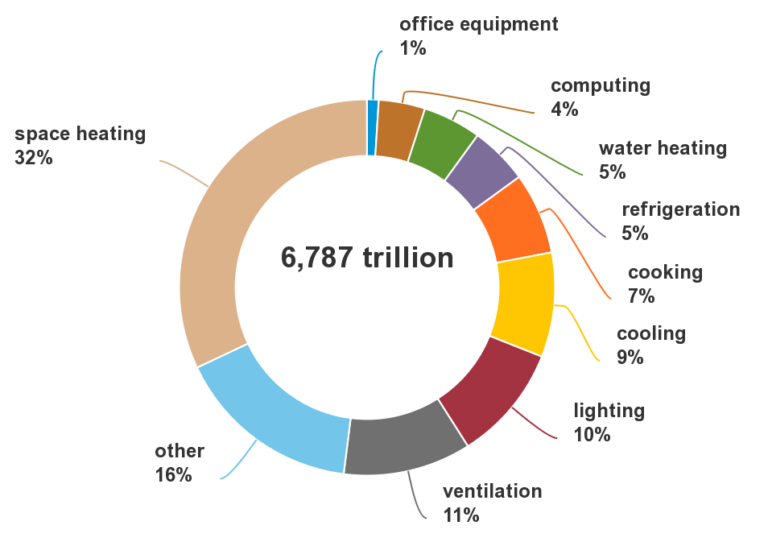
Major Fuels Consumption by End Use in U.S.
Energy Consumption Breakdown in Commercial Buildings: U.S. Energy Information Administration
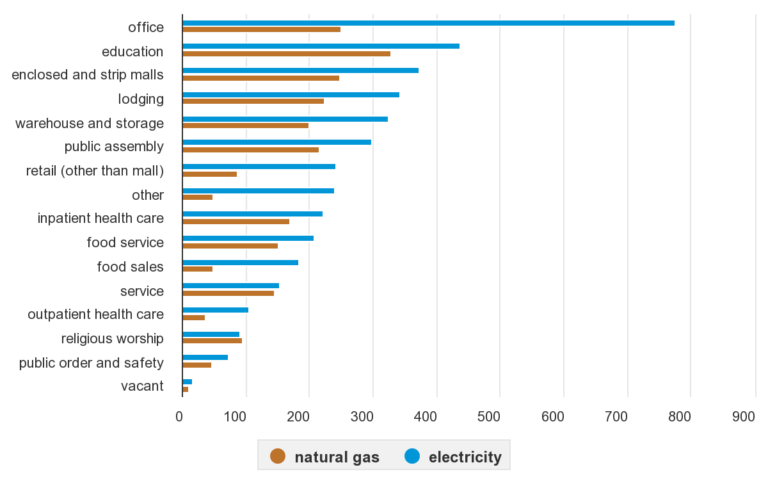
Electricity and Natural Gas Consumption in U.S
Energy consumption by principal building activity, graph made by the U.S. Energy Information Administration
Why do we care?
Often, we reduce HVAC to being just the loud unit outside our homes. However, it’s a sophisticated and essential system.
HVAC systems play a pivotal role in filtering and circulating clean air, reducing the risk of illness and exposure to airborne pathogens, as highlighted in studies by researchers like Parham Azimi and Brent Stephens. Beyond comfort, a poorly functioning HVAC system can lead to escalated repair costs, health-related expenses, and inefficiencies that strain finances and environmental resources.

The Hidden Costs of Inefficient HVAC Systems
A poorly functioning HVAC system doesn’t just fail in providing comfort; it can lead to unexpected expenses. From frequent repairs to health-related costs and the inefficiencies of an outdated system, the financial implications are significant. Extending the life and performance of these systems through modern solutions not only saves money but also enhances our living and working environments.
While a single HVAC unit may last for decades before needing to be replaced, their length of usability can be shortened by overheating and overuse. This is why HVAC systems can be so costly to run—we rely on them to keep temperature 24/7.
We now have solutions that improve the life of HVAC and bring these systems into the future.
A Little Automation Goes a Long Way
Enter, Building Automation Systems (BAS). These are networks that interconnect and automate various building systems including lighting, HVAC, fire, and security. A BAS centralizes control over these components, allowing for unparalleled management of a building’s environment.
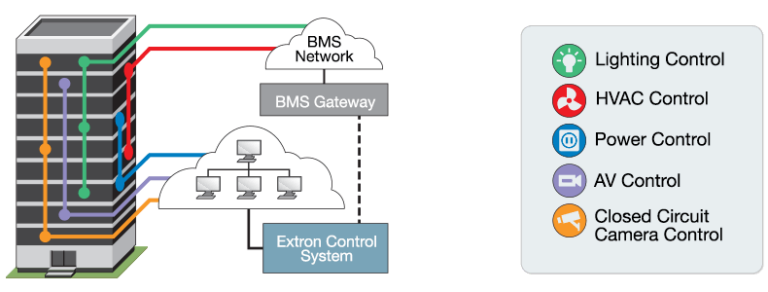
Example of a BAS, image from Extron
Through BAS, building functions can be automated, leading to reduced energy consumption across multiple systems. For instance, automating thermostats can lead to substantial savings. The Department of Energy notes that adjusting thermostats by 7°-10°F for 8 hours daily can lead to a 10% annual saving on heating and cooling. In commercial spaces, such adjustments, especially during off-hours, can significantly reduce energy consumption.
The Real-World Impact of BAS
Implementing BAS in conjunction with HVAC systems supports sustainability goals and positively impacts the bottom line. Retail buildings, for example, can significantly reduce their electricity and natural gas usage with a comprehensive BAS, as reported by E Source Companies LLC. The integration of BAS in newer buildings can yield energy savings of 5% to 15%, while in older buildings, these savings can exceed 30%.
As technology advances, the potential for further innovations in HVAC and BAS is immense. The future of building management lies in smart systems that can predict and adapt to changes in usage patterns, weather conditions, and occupancy levels. These advancements promise even greater efficiencies and cost savings.
Case Study: The Transformation of Miami Tower with BAS

Photo source: Miami Tower, managed by the CP Group
The information on this case study is provided by Computrols and their experience with optimizing Miami Tower through building automation. Constructed in 1983, Miami Tower is a skyscraper totaling 47 floors with 1 million square feet of space. Working with the company Computrols, the building updated its automation over time and completed BAS integration over 3 phases. These phases made it possible to complete the integration of multiple systems in the building, including fire and HVAC. Even before the integration was fully completed, the building saw immediate reduced operating and energy costs with kWh consumption being reduced by 10-15% year over year. By the end of the 3 phases, kWh consumption further decreased by almost 25%.
The result of this integration is better building operation, reduced energy consumption, and happier tenants, according to Computrols. The building saved $250,000 a year on energy costs and received 55% less temperature alerts from tenants!
BAS is a powerful tool that can not only reduce building energy consumption, but also improve the indoor environment for occupants. Improving the functionality of a building is not only a good financial decision; it can be a great addition if you are looking to pursue building certification in the near future.
Unlock Your Building’s Energy Potential with Conservice The Utility Experts
Ready to transform your building’s energy management? Conservice The Utility Experts specialize in optimizing building performance. Our expertise in reducing late fees and provider errors can help unlock hidden margins, saving you time and money. Contact us to explore how our solutions can enhance your building’s energy efficiency and operational effectiveness.



Subscribe To Our Blog Newsletter
Keep yourself ahead of the curve with the latest utility news, trends, & resources.
Editor's Picks

Retain Residents Longer with Transparent, Fair Utility Billing
Improve resident retention with transparent utility billing. Build trust, increase resident satisfaction, reduce disputes, and support lease renewals with fair billing practices.
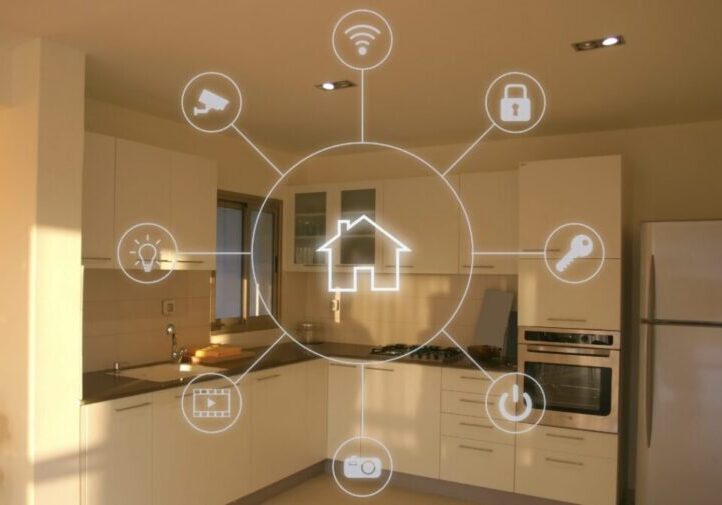
Power in Partnership: Building a Real Estate Tech Ecosystem That Works
More tech doesn’t always mean a better resident experience. The true potential lies not in individual tools, but in how they work together. From internet to access control, smart home tech to resident experience platforms, properties rely on a growing…

2026 Building Performance Standards Compliance by City
Stay ahead of 2026 building performance standards like Local Law 97. Track city deadlines, understand penalties, upgrade properties, and take action to stay compliant.

Good Data In, Good Data Out: The Key To Turn Season
It’s that time of year again for student housing. Move-outs are piling up nearly as fast as move-ins and student housing operators and property teams have just a few short weeks to get it all sorted before the next wave…

Improving Resident Experience Through Connectivity: 4 Reasons Bulk Internet Actually Works
Multifamily owners and operators are rethinking how connectivity is delivered. Bulk internet programs are becoming an increasingly valuable solution.

Conflict in Iran Affects Utility Costs
The situation in Iran is already having measurable economic effects. While much of the attention has focused on geopolitical implications, the financial impact on consumers is becoming increasingly clear. At the time of this publication, U.S. consumers have absorbed an…

A Practical Way to Prioritize Climate Risk Across Your Portfolio [Rent at Risk: Part 3]
Climate risk analysis produces a long list of exposures across assets and markets, but it does not always produce a clear path forward. How should you leverage and prioritize available data?

Utility University: March 2026
Utility costs are rising but this isn’t just another temporary spike. From increasing energy demand to the growing role of internet as essential infrastructure, the utility landscape is evolving fast. Here’s what property teams need to know to stay ahead.

The ROAD to Housing Act: What It Means for Supply, Renters, and Operators
The Senate passed the ROAD to Housing Act on March 12 with an 89-10 vote. That kind of margin is rare, especially for something as complex as housing policy. On paper, that kind of support should signal momentum. In reality, it highlights something more interesting.

What 650 Property Audits Revealed About Utility Rate Misalignment
Most utility bills are treated as a given. They arrive, they’re processed, and they’re paid. In some cases, they’re allocated or passed through to residents, but structurally, they are rarely questioned. Utilities tend to sit in the category of “fixed”…
Experience Effortless Utility Management and Cost Savings
Connect with us today to discover how our solutions can ease tenant billback, streamline utility management, and reduce your costs and energy usage. Make your utility management smarter and more efficient with Conservice!