
Centralization. Google it as a business intelligence concept in 2023, and you’ll see a search engine results page with as many different definitions as there are entries. In the property management space, it’s joined its cousins “innovation,” “automation,” and “AI-assisted” on the list of popular tech buzzwords. And like its friends on the list, Centralization is buzzing for a reason.
It makes space and solves problems.
At NAA Apartmentalize this year, deep in the heart of Atlanta, Georgia, the vendor hall buzzed with the familiar carnival spread of industry titans and small hawking vendors. From pet waste DNA analysis to affordable housing redesigns and even one (outstanding) managed-utilities Conservice booth, vendors lined up to hawk their wares while the aisles flowed with property managers, landlords, and maintenance professionals.
But encircling that vendor hall, widely attended breakout sessions, think tanks, and sales meetings crunched industry trends and planned for the future. And again and again, the presentations orbited that nebulous concept: centralization.
It wasn’t what the conference was about. But the key takeaways from multifamily industry leaders—the widespread industry obstacles and areas of opportunity discussed—tended to orbit the term.
And what did all those meetings and presentations teach us about centralization? That it’s a marriage of process consolidation and AI-assisted automation. Essentially, for the multifamily industry, centralization involves moving away from individual, property-based leasing and operational teams and into centralized, automated regional locations to improve efficiencies and cut down costs.
It’s two key facets?
- Infrastructural: Consolidating teams and responsibilities in order to streamline collaboration and increase efficiency
- AI-assistance: The process of automating repetitive or menial tasks in order to free up humans to do the thinky-thinky work.
Staffing Shortages and Centralization
There’s nothing new under the sun, right? Utility providers all over the nation are inflicting mail delays and long hold times, industry vendors are haggling over talent, and as it turns out, property management firms across the board are struggling with employee turnover and/or recruiting. The post-covid employee runoff has slowly transformed our industry into a long war of attrition, and one of the solutions to that attrition appears to be centralization.
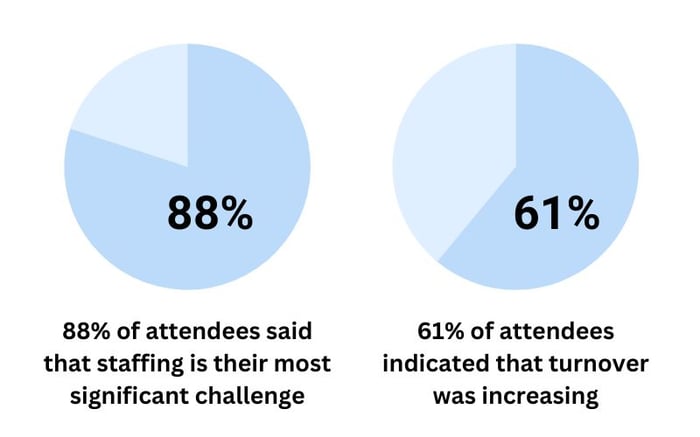
In a live poll at NAA (which was attended by more than ten thousand people, by the way), 88% of attendees said that staffing is their most significant challenge, and 61% indicated that turnover was increasing.
The fact is, the rise of entry level wages puts pressure on low to mid-tier positions throughout our industry. Now that we’re competing with fast food chains for the same pool of talent, multifamily has to differentiate its roles and responsibilities or prepare to offer substantially higher wages.
The key takeaway from several of NAA’s sessions this year was that centralization offers a meaningful solution to this issue for two different reasons:
Reason 1: Robots Can Fill the Gaps
Responsibilities like new prospect ingestion, initial tours, and resident qualification filtering has historically required a lot of manpower at a relatively low wage. According to several polls and presentations throughout the conference, the dearth of workers has made attending these critical responsibilities challenging, and higher level, better compensated employees have had to jump in to fill the gaps. It leads to less efficient processes, less productive talent, and inevitably a higher turnover rate as key employees seek work that meets their caliber.
AI-assistance and automation, like chatbots capable of moving new prospects through the qualification process automatically or Conservice’s own automated utility bill vetting, is sophisticated and reliable enough to step in where full time workers used to be required. This aspect of centralization—automating front end tasks, reduces the pressure on your team and helps you scale. A centralized body of automating tech is MUCH easier to leverage as your company grows than constantly increasing staff.
Learn how to automate and centralize your utilities.
Reason 2: Robot Friends Let Your Staff Do the Good Work
The fact is, today’s workforce is a lot less willing to engage with highly repetitive, high frequency work than in the past. A key aspect of centralization, maybe its most important benefit, is the increase in quality work it facilitates.
- Virtual tours help prospective residents filter out the units they’re not interested in before one of your talented team members commits to actually, physically walking them through a space.
- Managed-utilities services remove the repetitive, painstaking work of paying bills, auditing them for accuracy, and dealing with disconnects off of your accounting staff.
- Chatbots filter out the top 90% most common, easy-to-answer queries and make space for your professionals to engage with the more nuanced, interesting questions.
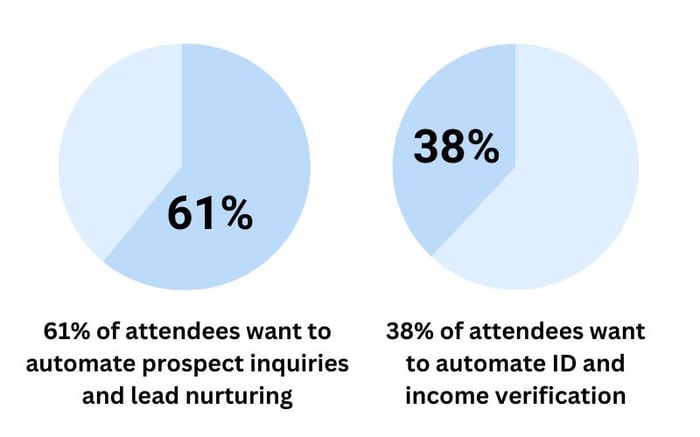
In another live poll, 61% of NAA attendees indicated that the facet of their business they’re most likely to automate first is prospect inquiries and lead nurturing. 38% indicated they’d like to automate ID and income verification. Either way, the net result would be a staff of workers more satisfied with their day-to-day work.
The Key Takeaway? Invest in Centralization.
The AI and automation arm of centralization has exploded into the multifamily industry. It’s a critical part of the new tech we’re developing for utilities management, and it’s become a staple component of almost every process our industry relies on. If you’re interested in how Conservice can help you centralize the ESG and utilities arm of your business, reach out to one of our Experts—they’re wizards.



Subscribe To Our Blog Newsletter
Keep yourself ahead of the curve with the latest utility news, trends, & resources.
Editor's Picks

Meter Tampering and Utility Theft Detection for Multifamily Communities
Utility theft doesn’t always look like a broken meter. Physical meter tampering, missed service transfers, and account mismatches can all leave utility costs unrecorded or assigned to the wrong account. Undetected vacant theft alone can cost an average community up…

The Only 5 Utility Management Companies Worth Considering in 2026
The multifamily utility market has no shortage of providers. But only a handful offer the scale, service depth, technology, or specialization to deserve serious consideration in 2026. Five stand out: Conservice (unashamed plug, but true is true), RealPage, Yardi, Entrata,…

How Property Management Software Supports Centralized Utility Management
TL;DR Enterprise operators need an accurate view of utility billing across every community. But when each property follows its own process, corporate teams spend more time checking records and reconciling reports before they can trust the portfolio view. Centralized utility…

Broadband Summit 2026 Debrief: The Infrastructure of Connectivity
Telecom strategy used to be limited to a few baseline questions: Who is the provider? What speeds do they offer? And are they offering the best rate? That was often the extent of the decision-making process. Walking out of Broadband…

Scaling Senior Living with Justin Brady
Scaling Senior Living with Justin Brady | RSS.com Who manages the utilities at a senior living community? Often, it’s a business manager or bookkeeper who is also juggling resident enrollment, retention, and day-to-day community operations. Lauren Howard sits down with…

Rental Junk Fee Laws in 2026: What Utility Billing Teams Need to Know
TL;DR: Fee transparency law is tightening in 2026, and most of the new rules target disclosure, not the formulas billing teams use to calculate a utility bill-back. This guide breaks down what counts as a junk fee, where disclosure rules…

Conservice’s 2nd Annual 5K Brings Together More Than 500 Participants and Gives Back to Cache Valley
LOGAN, Utah — September 10, 2026 — Conservice celebrated its second annual 5K Fun Run on September 9, bringing employees, families, and community partners together for an afternoon of connection and giving back. More than 550 people registered for this…

The How-to Guide for Reducing CAM Charges and Shared Space Costs
TL;DR When investigating where to reduce CAM charges and multifamily common-area costs, shared utility expenses might be the place to start. A higher bill doesn’t automatically signal waste, so it’s important to compare cost and consumption before deciding where to…

Installing EV Charging Stations: A Guide for Multifamily Property Owners
Have there always been this many electric vehicles on the road? It looks like the silent hum of an EV has become a roar, as Electric vehicles take the United States by storm. With the rise of EVs, comes the…
Policy Watch: Compliance & Building Readiness with Brett Kraus and Michelle Winters
Policy Watch: Compliance & Building Readiness with | RSS.com In this episode of Utility Wisdom, Michelle Winters, Vice President of Sustainability Sales at Conservice, sits down with Brett Kraus, Senior Legal Counsel, and Katie Piel, Sustainability Manager, to break down…
Experience Effortless Utility Management and Cost Savings
Connect with us today to discover how our solutions can ease tenant billback, streamline utility management, and reduce your costs and energy usage. Make your utility management smarter and more efficient with Conservice!