
In a world that increasingly demands sustainable practices, property managers stand at the crossroads of expectation and innovation. This article marks the beginning of a series unraveling the layered benefits of retrofits, starting with the multifaceted advantages of green roofs and green walls. We’re not just talking about a green thumb for a pat on the back; we’re examining a strategic investment that yields dividends in occupant well-being, financial returns, and environmental stewardship.
As the corporate landscape transforms, the clamor for eco-friendly workspaces intensifies. JLL’s extensive research, spanning 127 office markets across 112 cities, has found that an impressive 84% of premium office buildings have secured an environmental sustainability certification, signifying a resolute march toward greener horizons.
Today, we anchor our discussion in the verdant possibilities of green roofs and green walls—innovative solutions that marry form with function, offering a breath of fresh air to building occupants, lining the pockets with long-term savings, and bestowing upon our cities the gentle touch of nature’s own hand.
Let’s answer the pivotal question: why should we invest in green infrastructure?
The Unsung Heroes of Urban Drainage: The Power of Green Roofs
Imagine our cities as concrete jungles turning over a new leaf, where green roofs play a pivotal role in stormwater management. According to Green Roofs for Healthy Cities, these canopies absorb 70-90% of precipitation, a significant contribution in our fight against urban flooding and antiquated sewer systems plagued by combined sewer overflows (CSOs). This green intervention is more than an environmental remedy; it’s a financial safeguard for our cities’ futures.
According to the EPA, stormwater runoff is laden with chemicals and waste, storming our natural waterways and threatening public health. The narrative is grim: people swimming near storm drains face a 50% higher risk of illness. Green roofs and walls stand as sentinels, guarding our cities by diverting rainwater from our overburdened sewers, crafting a narrative of resilience and health for urban dwellers.
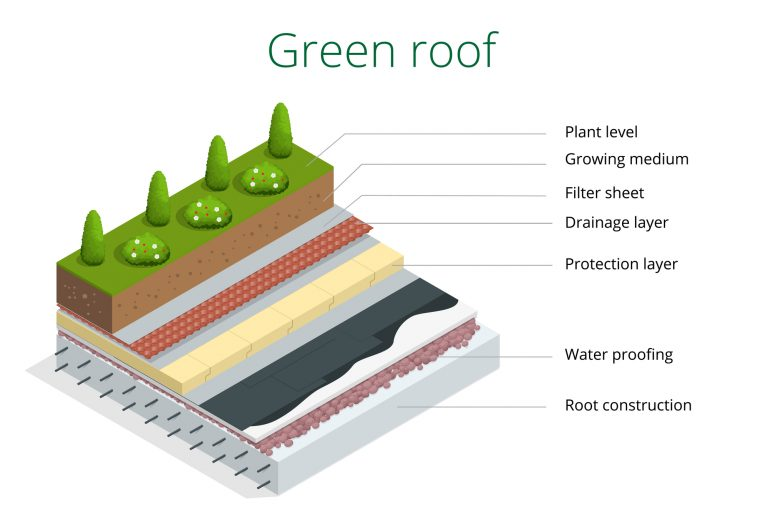
Image from Property Manager Insider
Cultivating Well-Being: The Natural Benefits of Living Architecture
Stepping into a building adorned with green walls is like a whisper of the forest in the heart of the city. Research, including that by Piers MacNaughton et al., draws a clear line between such living environments and a bounty of wellness benefits, from sharper cognitive function to deeper sleep—a testament to the power of nature-infused spaces.
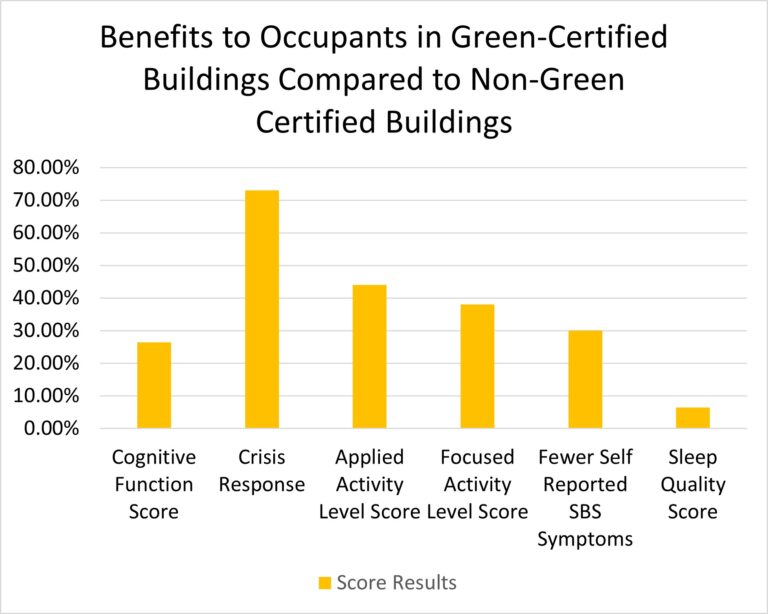
Graph created using results from Piers MacNaughton et al.’s study
The Sound of Silence: How Green Walls Quiet the Urban Buzz
Envision the constant drone of the city fading behind a lush green tapestry of foliage. Research by Azkorra et al. demonstrates that green walls serve as natural sound barriers, diminishing noise pollution by a remarkable 15 decibels—akin to dialing down the volume from a standard conversation (60 dB) to a gentle whisper (15 dB).
But the virtues of green walls stretch even further, touching on the subtle yet impactful aspects of cognitive well-being. These living installations offer a reprieve from the cacophony of urban life and are linked to notable improvements in cognitive function, acting as a balm for the symptoms of Sick Building Syndrome (SBS)—a condition often marked by ailments associated with time spent in certain buildings with poor air quality.
Here, concentration and productivity find fertile ground.
The Financial Bloom: Green Upgrades as a Smart Investment
Everyone knows roofs are expensive. Now, you’re likely nervously ticking back the years since your own was replaced. But green roofs are actually a source of hidden margin in your budget. So it’s not just about aesthetics or environmental stewardship—green roofs and walls make economic sense.
Katia Perini and Paolo Rosasco’s research indicates a property value surge of 3.9% with these installations. The EPA underscores a compelling financial narrative with a payback period of six years and a 224% return on investment, thanks to lifespan extension, stormwater management, and energy savings.
Consider the energy-saving saga of green roofs, where the EPA cites a temperature differential of 30–40°F compared to conventional roofs. This natural insulation translates to a reduced strain on HVAC systems and tangible savings—about $0.23 per square foot annually. Imagine the cumulative effect over sprawling corporate rooftops—a narrative of significant savings and sustainability.
For example’s sake, a 1,700 square foot roof would incur $400 in savings, and financial benefits only increase as the size of the roof increases.
A Green Showcase: McDonald’s Headquarters in Chicago
McDonald’s Headquarters in Chicago stands as a beacon of green innovation with advanced green roofs that won them the 2020 Green Roof and Wall Awards of Excellence. The building also boasts additional green roofs and terraces on the 6th and 8th floors, a large lush interior living wall, and many interior plantings.
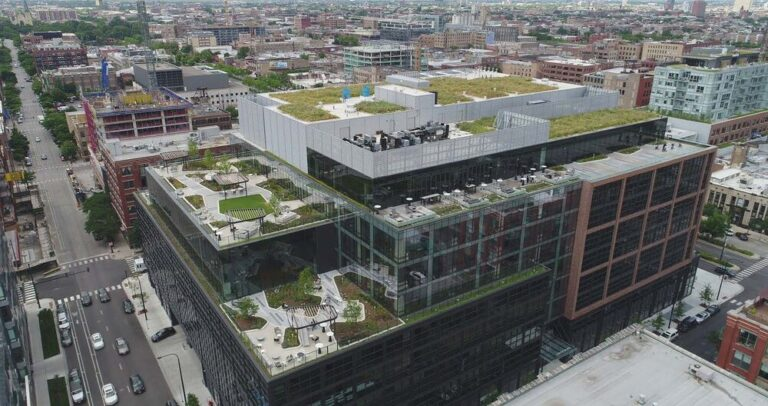
Image from Green Roofs for Healthy Cities
This corporate giant’s commitment reflects a broader movement where businesses embrace living architecture for its manifold benefits–from financial acumen to enhanced occupant wellness and eco-friendly branding.
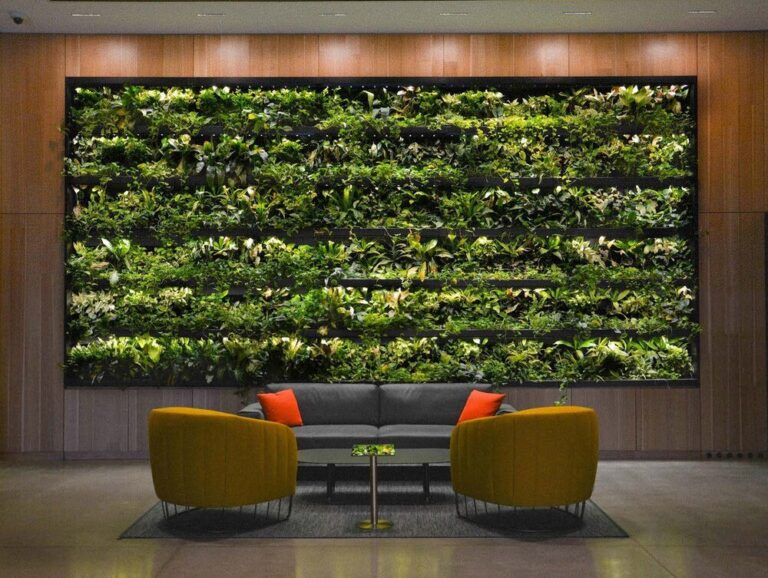
Image from Green Roofs for Healthy Cities
A Breath of Fresh Air: Greenery Roofs and Green Walls Are Worth the Investment
The case for green roofs and walls transcends aesthetics, touching upon financial viability, occupant satisfaction, and infrastructural longevity. These retrofits are more than a trend; they’re a compelling argument for a sustainable, prosperous future in urban development.
For those poised to take the leap into greener corporate landscapes, the experts at Conservice are ready to guide you through the verdant possibilities. Reach out today to explore how a retrofit with green roofs and walls could revolutionize your space.



Subscribe To Our Blog Newsletter
Keep yourself ahead of the curve with the latest utility news, trends, & resources.
Editor's Picks

Retain Residents Longer with Transparent, Fair Utility Billing
Improve resident retention with transparent utility billing. Build trust, increase resident satisfaction, reduce disputes, and support lease renewals with fair billing practices.
Power in Partnership: Building a Real Estate Tech Ecosystem That Works
More tech doesn’t always mean a better resident experience. The true potential lies not in individual tools, but in how they work together. From internet to access control, smart home tech to resident experience platforms, properties rely on a growing…
2026 Building Performance Standards Compliance by City
Stay ahead of 2026 building performance standards like Local Law 97. Track city deadlines, understand penalties, upgrade properties, and take action to stay compliant.

Good Data In, Good Data Out: The Key To Turn Season
It’s that time of year again for student housing. Move-outs are piling up nearly as fast as move-ins and student housing operators and property teams have just a few short weeks to get it all sorted before the next wave…

Improving Resident Experience Through Connectivity: 4 Reasons Bulk Internet Actually Works
Multifamily owners and operators are rethinking how connectivity is delivered. Bulk internet programs are becoming an increasingly valuable solution.

Conflict in Iran Affects Utility Costs
The situation in Iran is already having measurable economic effects. While much of the attention has focused on geopolitical implications, the financial impact on consumers is becoming increasingly clear. At the time of this publication, U.S. consumers have absorbed an…
A Practical Way to Prioritize Climate Risk Across Your Portfolio [Rent at Risk: Part 3]
Climate risk analysis produces a long list of exposures across assets and markets, but it does not always produce a clear path forward. How should you leverage and prioritize available data?

Utility University: March 2026
Utility costs are rising but this isn’t just another temporary spike. From increasing energy demand to the growing role of internet as essential infrastructure, the utility landscape is evolving fast. Here’s what property teams need to know to stay ahead.

The ROAD to Housing Act: What It Means for Supply, Renters, and Operators
The Senate passed the ROAD to Housing Act on March 12 with an 89-10 vote. That kind of margin is rare, especially for something as complex as housing policy. On paper, that kind of support should signal momentum. In reality, it highlights something more interesting.

What 650 Property Audits Revealed About Utility Rate Misalignment
Most utility bills are treated as a given. They arrive, they’re processed, and they’re paid. In some cases, they’re allocated or passed through to residents, but structurally, they are rarely questioned. Utilities tend to sit in the category of “fixed”…
Experience Effortless Utility Management and Cost Savings
Connect with us today to discover how our solutions can ease tenant billback, streamline utility management, and reduce your costs and energy usage. Make your utility management smarter and more efficient with Conservice!