
When we consider the costs to run our homes and offices, energy bills invariably come to mind. The concern is well-founded, as Heating, Ventilation, and Air Conditioning (HVAC) systems account for nearly half of a building’s energy usage, according to the U.S. Energy Information Administration. The efficiency of these systems, or lack thereof, impacts our comfort, finances, and environmental footprint.
The high energy costs associated with HVAC aren’t solely due to occupant behavior. Factors such as inefficient HVAC systems, the specific use of the building, and human error contribute markedly to our regular energy expenditures.
For this blog entry, we will be focusing on an area that we know about and rely on every day—and whose potential we’ve only just started tapping into recently. Today, we will be discussing how HVAC performance can benefit using a Building Automation System (BAS).
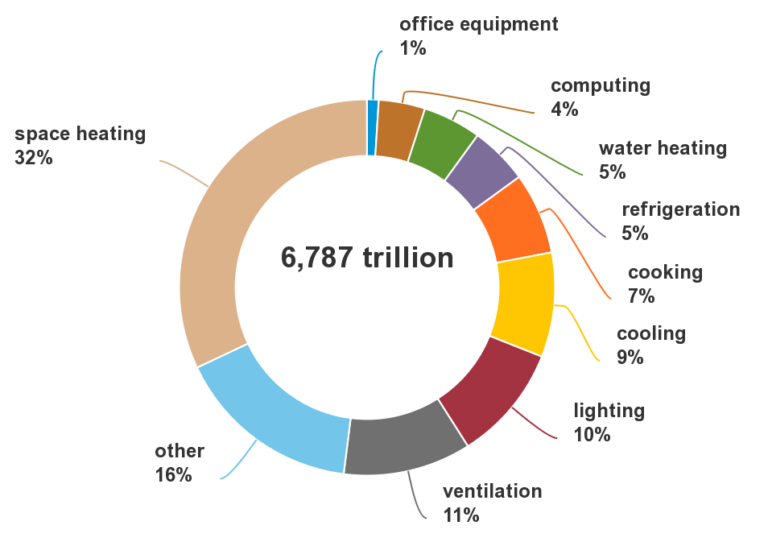
Major Fuels Consumption by End Use in U.S.
Energy Consumption Breakdown in Commercial Buildings: U.S. Energy Information Administration
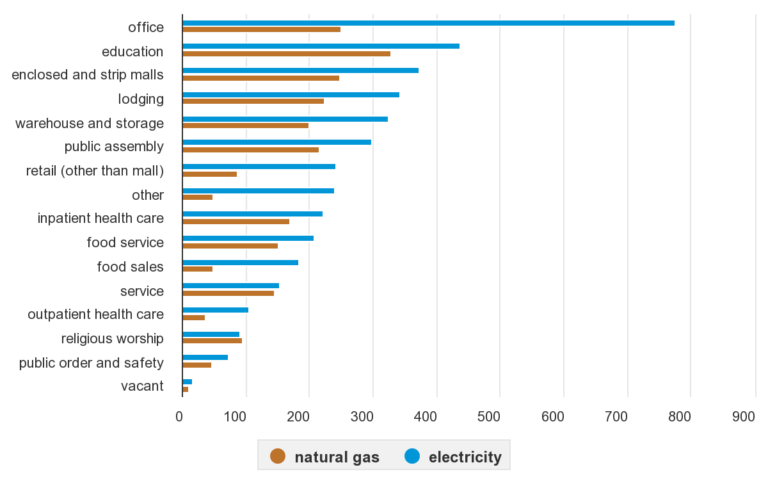
Electricity and Natural Gas Consumption in U.S
Energy consumption by principal building activity, graph made by the U.S. Energy Information Administration
Why do we care?
Often, we reduce HVAC to being just the loud unit outside our homes. However, it’s a sophisticated and essential system.
HVAC systems play a pivotal role in filtering and circulating clean air, reducing the risk of illness and exposure to airborne pathogens, as highlighted in studies by researchers like Parham Azimi and Brent Stephens. Beyond comfort, a poorly functioning HVAC system can lead to escalated repair costs, health-related expenses, and inefficiencies that strain finances and environmental resources.

The Hidden Costs of Inefficient HVAC Systems
A poorly functioning HVAC system doesn’t just fail in providing comfort; it can lead to unexpected expenses. From frequent repairs to health-related costs and the inefficiencies of an outdated system, the financial implications are significant. Extending the life and performance of these systems through modern solutions not only saves money but also enhances our living and working environments.
While a single HVAC unit may last for decades before needing to be replaced, their length of usability can be shortened by overheating and overuse. This is why HVAC systems can be so costly to run—we rely on them to keep temperature 24/7.
We now have solutions that improve the life of HVAC and bring these systems into the future.
A Little Automation Goes a Long Way
Enter, Building Automation Systems (BAS). These are networks that interconnect and automate various building systems including lighting, HVAC, fire, and security. A BAS centralizes control over these components, allowing for unparalleled management of a building’s environment.
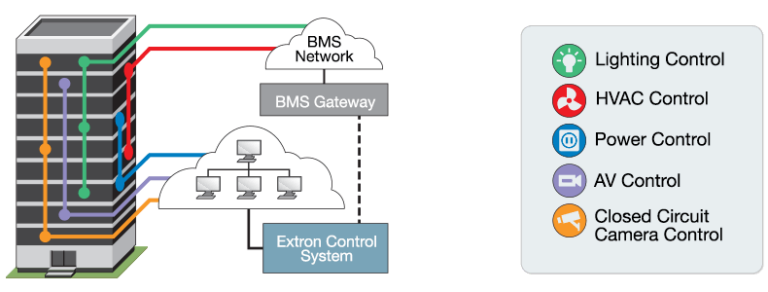
Example of a BAS, image from Extron
Through BAS, building functions can be automated, leading to reduced energy consumption across multiple systems. For instance, automating thermostats can lead to substantial savings. The Department of Energy notes that adjusting thermostats by 7°-10°F for 8 hours daily can lead to a 10% annual saving on heating and cooling. In commercial spaces, such adjustments, especially during off-hours, can significantly reduce energy consumption.
The Real-World Impact of BAS
Implementing BAS in conjunction with HVAC systems supports sustainability goals and positively impacts the bottom line. Retail buildings, for example, can significantly reduce their electricity and natural gas usage with a comprehensive BAS, as reported by E Source Companies LLC. The integration of BAS in newer buildings can yield energy savings of 5% to 15%, while in older buildings, these savings can exceed 30%.
As technology advances, the potential for further innovations in HVAC and BAS is immense. The future of building management lies in smart systems that can predict and adapt to changes in usage patterns, weather conditions, and occupancy levels. These advancements promise even greater efficiencies and cost savings.
Case Study: The Transformation of Miami Tower with BAS

Photo source: Miami Tower, managed by the CP Group
The information on this case study is provided by Computrols and their experience with optimizing Miami Tower through building automation. Constructed in 1983, Miami Tower is a skyscraper totaling 47 floors with 1 million square feet of space. Working with the company Computrols, the building updated its automation over time and completed BAS integration over 3 phases. These phases made it possible to complete the integration of multiple systems in the building, including fire and HVAC. Even before the integration was fully completed, the building saw immediate reduced operating and energy costs with kWh consumption being reduced by 10-15% year over year. By the end of the 3 phases, kWh consumption further decreased by almost 25%.
The result of this integration is better building operation, reduced energy consumption, and happier tenants, according to Computrols. The building saved $250,000 a year on energy costs and received 55% less temperature alerts from tenants!
BAS is a powerful tool that can not only reduce building energy consumption, but also improve the indoor environment for occupants. Improving the functionality of a building is not only a good financial decision; it can be a great addition if you are looking to pursue building certification in the near future.
Unlock Your Building’s Energy Potential with Conservice The Utility Experts
Ready to transform your building’s energy management? Conservice The Utility Experts specialize in optimizing building performance. Our expertise in reducing late fees and provider errors can help unlock hidden margins, saving you time and money. Contact us to explore how our solutions can enhance your building’s energy efficiency and operational effectiveness.



Subscribe To Our Blog Newsletter
Keep yourself ahead of the curve with the latest utility news, trends, & resources.
Editor's Picks

Broadband Summit 2026 Debrief: The Infrastructure of Connectivity
Telecom strategy used to be limited to a few baseline questions: Who is the provider? What speeds do they offer? And are they offering the best rate? That was often the extent of the decision-making process. Walking out of Broadband…

Scaling Senior Living with Justin Brady
Scaling Senior Living with Justin Brady | RSS.com Who manages the utilities at a senior living community? Often, it’s a business manager or bookkeeper who is also juggling resident enrollment, retention, and day-to-day community operations. Lauren Howard sits down with…
Rental Junk Fee Laws in 2026: What Utility Billing Teams Need to Know
TL;DR: Fee transparency law is tightening in 2026, and most of the new rules target disclosure, not the formulas billing teams use to calculate a utility bill-back. This guide breaks down what counts as a junk fee, where disclosure rules…

Conservice’s 2nd Annual 5K Brings Together More Than 500 Participants and Gives Back to Cache Valley
LOGAN, Utah — September 10, 2026 — Conservice celebrated its second annual 5K Fun Run on September 9, bringing employees, families, and community partners together for an afternoon of connection and giving back. More than 550 people registered for this…

The How-to Guide for Reducing CAM Charges and Shared Space Costs
TL;DR When investigating where to reduce CAM charges and multifamily common-area costs, shared utility expenses might be the place to start. A higher bill doesn’t automatically signal waste, so it’s important to compare cost and consumption before deciding where to…

Installing EV Charging Stations: A Guide for Multifamily Property Owners
Have there always been this many electric vehicles on the road? It looks like the silent hum of an EV has become a roar, as Electric vehicles take the United States by storm. With the rise of EVs, comes the…
Policy Watch: Compliance & Building Readiness with Brett Kraus and Michelle Winters
Policy Watch: Compliance & Building Readiness with | RSS.com In this episode of Utility Wisdom, Michelle Winters, Vice President of Sustainability Sales at Conservice, sits down with Brett Kraus, Senior Legal Counsel, and Katie Piel, Sustainability Manager, to break down…
Conservice Earns 15th Appearance on Inc. 5000
RIVER HEIGHTS, Utah, August 14, 2026 – Conservice, the nation’s leading utility management provider, has been named to the 2026 Inc. 5000, marking the company’s 15th appearance on the annual list of America’s fastest-growing private companies. The recognition adds another…

5 Signs Your Telecom Strategy Needs An Update
Telecom has a funny way of becoming someone’s problem. A resident can’t get connected, so they call the onsite property team. A provider needs an answer, so someone digs through an old agreement. A renewal date appears on the calendar,…

How to Streamline Invoice Processing & Auditing
Utility bills have a lot to say. They can tell you where costs are climbing and where usage looks unusual. They can point to a provider error before it hits your bottom line. And across hundreds or thousands of accounts,…
Experience Effortless Utility Management and Cost Savings
Connect with us today to discover how our solutions can ease tenant billback, streamline utility management, and reduce your costs and energy usage. Make your utility management smarter and more efficient with Conservice!